Blackjack Online: How to Play, Rules, Strategy and Free Demo
Last updated: July 2026

Last updated: July 2026
"The biggest mistake Indian casino users make is confusing a winning streak with a winning strategy. Treat blackjack as a structured card game with a mathematical house edge, not a shortcut to profit. Before you deposit your INR, test the game mechanics, verify the platform's KYC policies, and set a hard limit for your session." - Nisha Rao, Lead Analyst, Casino and Betting India
Disclaimer: This article is for educational purposes only. Gambling involves financial risk. Never wager money you cannot afford to lose. If gambling causes concern, contact a responsible-gaming helpline in your region. Players must be 18+ (or the legal age in their jurisdiction).
Online blackjack is a digital adaptation of the classic casino card game where players compete against the dealer. Originally evolving from the game "21," the term "blackjack" was historically linked to a bonus payout offered during the Klondike Gold Rush era, though the exact origin remains debated among historians. Whether you prefer a fast-paced software environment or streaming live video tables, understanding the core rules is the single most important step before you play.
This guide walks you through everything from basic card values to the long-term mathematical reality of the game, helping you approach the table with practical awareness rather than blind optimism.
Quick summary: Blackjack is a card game where you aim to beat the dealer's hand without exceeding 21. Learn the rules, memorise basic strategy (when to hit, stand, double, or split), and practise in free RNG demos before risking real money. The house always holds a mathematical edge of roughly 0.5% with perfect play. Treat blackjack as paid entertainment, not an income source.
Blackjack is a casino-banked card game where the primary goal is to accumulate a hand total closer to 21 than the dealer's total, without exceeding 21. If your hand value goes over 21, you bust and instantly lose your bet. Simple enough on paper, right?
You play only against the dealer, not against other players at the table. The dealer follows an automated script: drawing to at least 17 and standing thereafter. The player, meanwhile, must make active choices. This structure means your decisions directly impact your bankroll. Even the best algorithmic agents achieve only around a 43% win rate with a negative average reward over time, confirming that the odds are structurally against the player.
"None of the agents were able to find an optimal policy; the best strategy yields approximately 43% wins with a negative mean reward in the long run." - University of Arizona, "Reinforcement Learning Agents in Blackjack Modeling" (2023). https://www.proquest.com/dissertations-theses/reinforcement-learning-blackjack/docview/
Before diving into strategy, try a risk-free demo to get comfortable with the interface. Online casino platforms often offer free RNG blackjack without registration.
The foundational logic of casino blackjack revolves around balancing the chance of improving your hand against the risk of busting, based on the limited information provided by the dealer's single visible card. That tension between risk and reward is what makes the game compelling, and also what makes it dangerous if you skip the homework.
Every blackjack hand begins with an initial deal where the player receives two cards face up, and the dealer receives two cards (one face up, one face down). These two cards form your starting total and determine your risk level for the round.
Your initial deal sets the stage for every subsequent decision. If your two cards show a weak total, you will likely need to request additional cards. The dealer's visible card, known as the upcard, dictates your strategy for the round. Think of it this way: those two cards are the only real information you have. Everything else is probability.
A "natural blackjack" is formed exclusively by an Ace and any 10-value card dealt as your first two cards, yielding exactly 21 points. Hand comparison logic is straightforward: non-busting player hands win by having a higher total than the dealer, or by surviving if the dealer busts.
A natural blackjack is the strongest hand in the game. In standard setups, this hand pays a 3:2 ratio, meaning a ₹1,000 bet returns a ₹1,500 profit if the dealer does not also have a natural 21. Be aware, though, that some online tables offer a reduced 6:5 payout instead of 3:2. That difference increases the house edge by roughly 1.4%. Always check the table rules before sitting down.
If both the player and the dealer have a natural blackjack, the outcome is a tie, called a push, and the bet is returned. A player wins in three ways: a natural 21 the dealer cannot match, a higher non-busting total, or the dealer busting while the player's hand remains alive.
"The player wins by achieving a natural 21 unmatched by the dealer, holding a higher total without busting, or surviving while the dealer busts." - Simplified Blackjack Game-Theoretic Analysis (2024). arXiv preprint. https://arxiv.org/
Key blackjack terms to know before you play
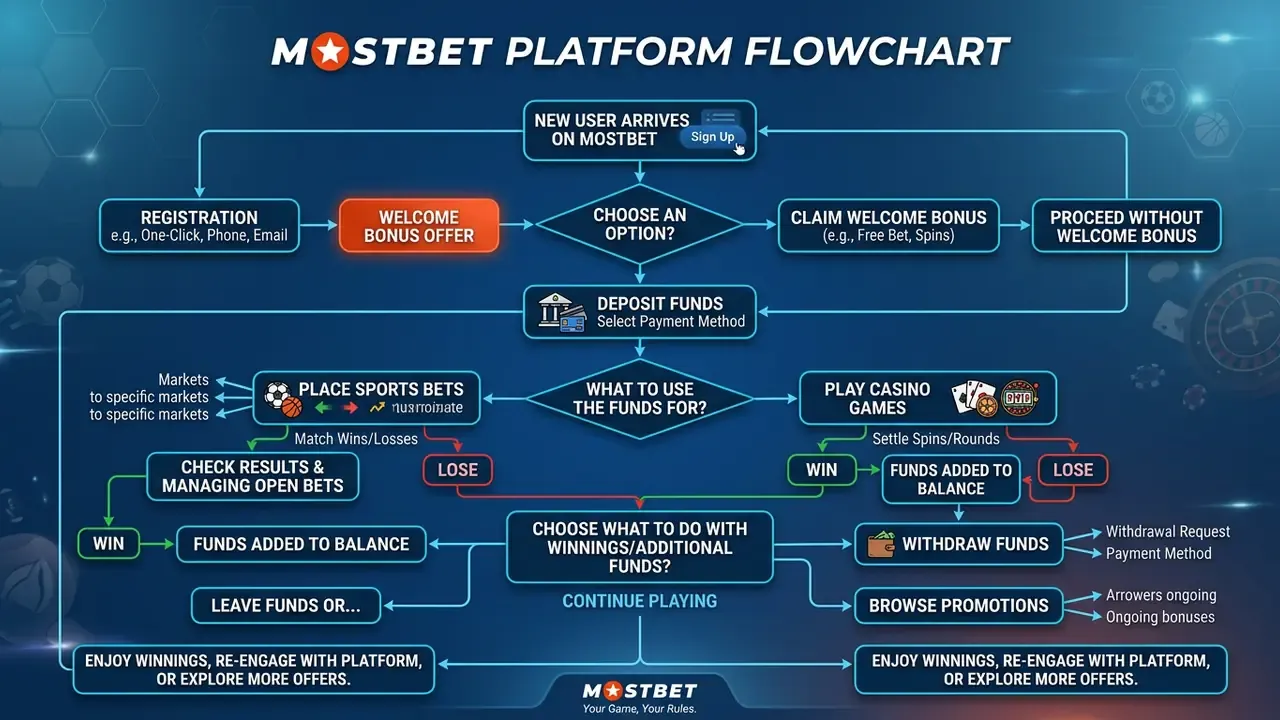
Playing blackjack involves a strict, sequential cycle: placing bets, receiving the deal, executing player decisions, revealing dealer outcomes, and processing settlement. Every online blackjack round follows this unchanging workflow.
To play blackjack online smoothly, you must understand this flow. Modern software platforms enforce these steps through automated prompts. You begin by allocating a portion of your bankroll, after which the random number generator (RNG) or a live human distributes the cards. During your turn, you interact with the software to hit or stand. Only after you decide does the dealer resolve their hand. No shortcuts, no skipping ahead.
You must confirm your preferred bet size by selecting digital chips and placing them on the virtual table before the timer ends. Once the bet is locked, the initial two cards are dealt sequentially.
This phase is controlled by rigid countdowns. In live dealer formats, players normally have a short 7 to 15 second window to place bets, after which the system locks all wagers to prevent manipulation. RNG tables typically allow unlimited thinking time before the deal but enforce the same lock-out once the round begins. You then get your first view of your hand alongside the dealer's upcard, marking the beginning of the online blackjack game loop.
"Higher game speed is consistently associated with increased bet frequency and reduced pauses between decisions." - Systematic Review on Structural Characteristics of Gambling Products (2023). https://pubmed.ncbi.nlm.nih.gov/
That speed factor matters. Faster rounds mean faster spending if you are not paying attention.

During your turn, you must choose to hit, stand, double down, or split pairs based on the mathematical risk of the current cards. These moves structurally change your ongoing hand and potential payout.
If your total is low, you click "hit" to draw. If you are satisfied with a high total, you click "stand" to pass the turn. If you hold a pair of eights, standard basic strategy dictates using the "split" option, which takes a second bet from your bankroll to divide the eights into two new hands. If you hold a strong total like 11 against a weak dealer card, a "double" increases your bet for exactly one final card. Using these buttons correctly defines your entire blackjack experience. Or, well, misusing them defines it too, just in a more expensive way.

The dealer turn initiates automatically after you stand or bust, drawing cards according to strict casino rules until reaching at least a hard 17. Settlement occurs instantly, categorising your result into a win, loss, or push.
If you have busted, the system immediately flags your bet as a loss before the dealer even reveals their hidden card. If you are still in, the dealer flips their downward card. Standard rules require the dealer to stand on any 17 or higher. When the hand concludes, the software processes the results automatically: winning bets are credited dynamically to your INR account balance, while losses are swept away. No negotiation, no appeals.
Basic blackjack rules assign numbered values to cards, grant a dual value to the Ace, and govern how a total sum interacts with the table's betting limits. Understanding these mechanics helps you avoid immediate losses.
While a physical blackjack casino atmosphere is heavily social, the underlying rules remain rigidly mathematical. The cards form totals that define the status of your hand. Knowing when a hand is "soft" or "hard" dictates when you should take more risk and when you should hold back.
Cards listed 2 through 10 carry their exact numerical face value, while face cards (Jack, Queen, King) are all valued at 10. The Ace is unique because it counts as either 1 or 11, depending on which value benefits the total without busting.
Modern online and live blackjack games rarely use a single 52-card deck. To discourage advantage play, casinos typically combine six to eight decks in a "shoe." More decks slightly increase the house edge, making strict adherence to basic strategy even more critical. Worth noting: the number of decks is usually listed in the game's info or rules tab, so check before you sit down.
A hand featuring an Ace valued at 11 is defined as a "soft" hand. For example, an Ace and a 6 form a "soft 17." Soft hands allow the player to hit without immediate risk of busting, since drawing a large card simply forces the Ace to recalibrate its value to 1. Without an active Ace, you have a "hard" hand, where taking an extra card carries a strict and unchangeable bust probability. That distinction between soft and hard is, honestly, the single most important concept beginners overlook.
"An improved curriculum-trained agent reduced the average bust rate from 32.9% to 28.0% by learning to avoid unnecessary hits on high hard totals." - "Learning to Play Blackjack: A Curriculum Learning Perspective" (2026). arXiv preprint. https://arxiv.org/
Splitting pairs and doubling down are tactical wagers built into the rules to alter the size of your bet mid-game, while insurance is an optional defensive side-bet offered against a dealer's Ace.
When you hold two matching cards like 8s, splitting breaks them into two better-starting hands. Doubling down allows aggressive action on strong totals like a 10 or 11. Conversely, taking the insurance bet is statistically weak. Agents trained to maximise long-term profit consistently avoid insurance. Without card counting, it carries a built-in negative expected value averaging roughly a 7.4% loss over time. In plain terms: insurance sounds protective, but it quietly drains your bankroll.
"Agents trained to maximise long-run returns generally avoid insurance, as without card counting it carries a built-in negative expectation." - RL Variations in Blackjack (2023). arXiv preprint. https://arxiv.org/
Basic blackjack strategy is a mathematically validated framework indicating the most optimal hit, stand, double, or split decision for every card combination. It minimises the house edge to approximately 0.5% but does not guarantee long-term profit.
Applying basic strategy removes emotional guesswork from casino blackjack and online blackjack. No learning agent, human or algorithmic, has found a policy that overcomes the house edge in the long run. The best achieve roughly 43% wins with a negative mean reward.
"None of the agents were able to find an optimal policy; even the best strategy yields approximately 43% wins with a negative mean reward in the long run." - University of Arizona, "Reinforcement Learning Agents in Blackjack Modeling" (2023). https://www.proquest.com/dissertations-theses/reinforcement-learning-blackjack/docview/
The goal of the strategy is strictly to extend your budget and entertainment time by making the mathematically "least wrong" choice in bad scenarios. Not glamorous, but effective.
You should hit hard totals of 12 to 16 when the dealer displays a strong 7 through Ace, and firmly stand on those same hands when the dealer shows a weak 2 through 6. Decision-making revolves entirely around the dealer's risk of busting.
The biggest strategic flaw recreational players exhibit is a phenomenon researchers label "fear of busting." Players improperly stand on a hard 16 against a dealer's 10 because hitting risks a bust. But standing on that same hand mathematically guarantees a higher probability of loss. The correct move, uncomfortable as it feels, is to hit. Without an Ace, a player should hit on any total below 17 when the dealer shows an Ace or a 7 through 10.
"Without an Ace, the player should hit when holding below 17 if the dealer shows an Ace or a card from 7 upwards." - RL Variations in Blackjack (2023). arXiv preprint. https://arxiv.org/
Conversely, if the dealer upcard is a weak 6, standing on a 12 forces the dealer to draw cards into a highly probable bust trap. Patience pays here, even when your hand looks fragile.
You should always split pairs of 8s or Aces to maximise potential, and double down on hard 9s, 10s, or 11s against weak dealer upcards. These strategic options leverage strong odds to multiply your returns.
Splitting 8s breaks a mathematically awful 16 into two highly playable hands starting with 8. Doubling a hard 10 or 11 against a dealer showing a 5 or 6 maximises the potential bankroll spike before the dealer acts. Critically, never split 10s, 5s, or 4s. A pair of 10s gives you 20, a hand that wins roughly 80% of the time. A pair of 5s is better treated as a hard 10 for a double-down opportunity. Splitting 4s creates two weak starting hands of 4 each. Not worth it.
"The curriculum-trained agent achieved a mean win rate of 47.41% versus the baseline's 43.97%, largely through correct use of double-down and split decisions." - "Learning to Play Blackjack: A Curriculum Learning Perspective" (2026). arXiv preprint. https://arxiv.org/
. During a recent platform evaluation for our iGaming sections, a beginner spent two days practising splits](/media/mostbete_in_com_media_text_section_32_media_image_1514888a_f1da_4148_9b0a_c2c6c104accc_737a6b443b.webp)
To test these complex rules properly, players often use free tools. During a recent platform evaluation for our iGaming sections, a beginner spent two days practising splits on an RNG demo. By the time they verified their KYC and uploaded funds, they instinctively recognised soft hand scenarios, drastically reducing early bankroll depletion caused by fast dealer timers. That kind of preparation makes a real difference.
Practise splits and double-downs hands-on: online casino platforms offer RNG tables with low minimum limits ideal for beginners.
| Player Hand Type | Player Total | Dealer Upcard | Recommended Action |
|---|---|---|---|
| Hard hand | 8 or less | Any | Hit (no bust risk) |
| Hard hand | 9 | 3-6 | Double (strong finishing potential) |
| Hard hand | 10-11 | 2-9 | Double (high chance of reaching 20-21) |
| Hard hand | 12-16 | 2-6 | Stand (let the dealer risk busting) |
| Hard hand | 12-16 | 7-Ace | Hit (improve weak total against a strong upcard) |
| Hard hand | 17 or more | Any | Stand (bust risk drastically outweighs benefit) |
| Soft hand | 13-17 (Ace + low card) | Any | Hit (utilise the flexible Ace) |
| Pair | 8-8 | Any | Split (avoid hard 16, build better hands) |
| Pair | A-A | Any | Split (two chances to hit 21) |
| Pair | 10-10, 5-5, 4-4 | Any | Do NOT Split (10s are a strong 20; 5s are better doubled as 10; 4s create two weak hands) |
Fact Check: Applying perfect basic strategy charts does not generate risk-free profit. Due to the payout structure evaluated in reinforcement-learning studies, the house maintains an edge of roughly 0.5%. Furthermore, "insurance" side bets add a projected 7.4% expected loss over time and should be avoided systematically. And free blackjack, while excellent for learning mechanics, feels psychologically different from real-money play. The emotional weight of actual INR on the line changes your decision-making in ways a demo cannot replicate.
The core difference between digital formats relies on pacing, trust mechanisms, and social elements, ranging from high-speed AI simulations to slower physical tables. The blackjack experience shifts fundamentally depending on the medium.
"Higher game speed is consistently associated with increased bet frequency and reduced pauses for deliberation." - Systematic Review on Structural Characteristics of Gambling Products (2023). https://pubmed.ncbi.nlm.nih.gov/
Whether dealing with an algorithmic interface or a human in a studio, the underlying comparison rules match. For Indian users, your choice dictates your withdrawal speed, payment limits, and required internet connection stability.
Online RNG blackjack functions through high-speed automated software dealing 60 to 80 hands per hour, while live blackjack features real human dealers streaming through high-definition video at a relaxed 20 to 30 hands per hour. Use RNG for fast study, and live dealer for social pacing.
RNG (Random Number Generator) online blackjack lacks physical friction. Cards are resolved instantly using software algorithms audited for fairness. Live blackjack merges the convenience of an online blackjack game with manual shuffling verified through Optical Character Recognition (OCR) technology. Live tables often feature specific betting limits, making it essential to have your payment method prepared before accepting the slower action. Online casinos offer blackjack in both RNG and live dealer formats within licensed, fairness-audited online casino platforms.
One practical note for Indian players: live blackjack streams require a stable internet connection. If your mobile data drops during a hand, the round continues without you, and the system auto-stands on your current total. That can be costly if you were planning to hit.
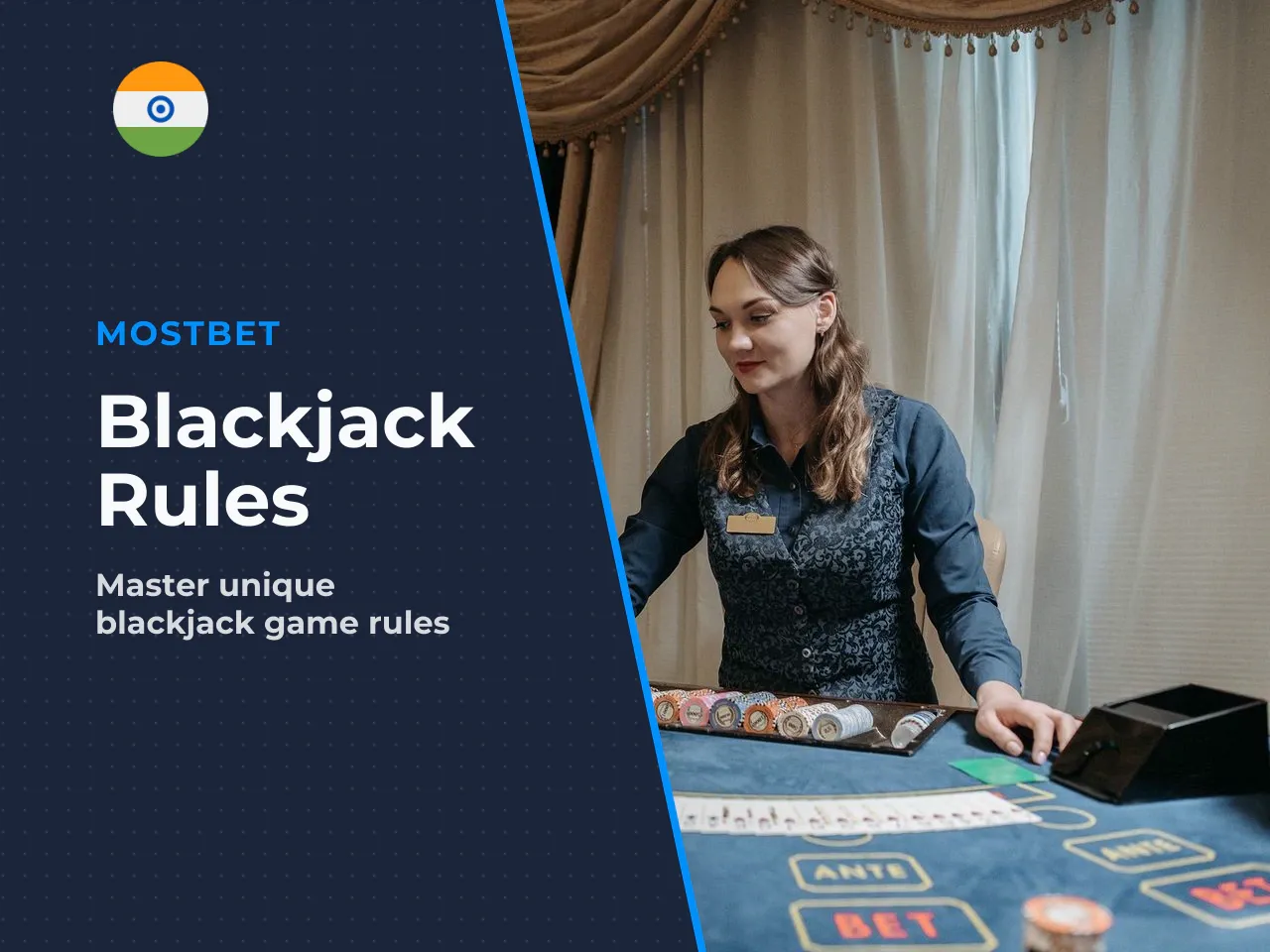
Physical casino blackjack introduces an immersive social environment with rigid handling etiquette, manual card distributions, and direct peer-to-peer interaction absent on mobile apps. The physical table experience moves at roughly 40 to 50 hands per hour.
When seated at a land-based table, strict rules apply. Standardised casino protocols enforce single-hand gestures: tapping the felt to hit, waving horizontally to stand. Furthermore, touching the cards with two hands is prohibited. This layer of social etiquette sets physical venues apart from the isolating tap-and-play mechanics of blackjack online. If you have only played digitally, the first time at a physical table can feel surprisingly intimidating. The rules are the same, but the atmosphere adds pressure that no app can simulate.
One of the most common concerns for Indian users is how money actually moves in and out of an online blackjack platform. This section gathers the practical financial information scattered across formats into a single reference.
The legality of online gambling in India is complex and depends on your state. India's Public Gambling Act (1867) prohibits operating physical gambling houses but does not explicitly cover online games. Several states, such as Goa, Sikkim, and Meghalaya, have enacted their own frameworks permitting certain forms of online gaming. Conversely, states like Telangana and Andhra Pradesh have passed laws that ban online gambling entirely, including casino-style games. Most Indian players access offshore-licensed platforms (e.g., Curacao or Malta licences) that accept INR, but the regulatory grey area means each player should verify local rules before depositing. This is not legal advice. When in doubt, consult a qualified professional.
| Method | Deposit Speed | Withdrawal Speed | Notes |
|---|---|---|---|
| UPI (Google Pay, PhonePe) | Instant | 1-24 hours | Most widely accepted for Indian players |
| NetBanking (NEFT/IMPS) | Instant to 30 min | 1-3 business days | Requires bank KYC alignment |
| Paytm Wallet | Instant | 1-24 hours | Check per-platform availability |
| Crypto (BTC/USDT) | 10-60 min | 10 min to 24 hours | Not all platforms support; verify legality |
| Visa/Mastercard | Instant | 3-5 business days | Some Indian banks decline gambling transactions |
KYC verification is standard: upload government-issued photo ID (Aadhaar, PAN, or passport) plus a recent utility bill. Incomplete or mismatched KYC documents are the number-one reason withdrawals stall. Complete verification before your first deposit to avoid frustration later. Seriously, this step alone saves more headaches than any strategy chart.
A large welcome bonus is not always better value. Most bonuses carry wagering requirements (also called "playthrough"). For instance, a 100% match bonus with a 35x wagering requirement on a ₹5,000 deposit means you must place ₹1,75,000 in total bets before any bonus-linked winnings become withdrawable. Blackjack often contributes only 10 to 20% toward wagering (compared to 100% for slots), so clearing a bonus at the blackjack table can take dramatically longer. Always read the terms before claiming.
Checklist: five steps before your first INR deposit
A blackjack demo allows beginners to practise core rules and basic strategies through free chips before engaging with real financial risk. You should utilise free blackjack online to master game flow, but respect its psychological limitations.
Free mechanics offer excellent procedural training for hitting buttons and recognising totals. However, free-play options and bonus credits increase engagement by normalising frequent play without real financial consequences, a pattern that can distort your sense of risk.
"Free-play options and bonus credits increase engagement by normalising frequent play without real financial consequences." - Systematic Review on Structural Characteristics of Gambling Products (2023). https://pubmed.ncbi.nlm.nih.gov/
A blackjack demo safely teaches you how to quickly identify hard and soft totals, practise fast basic strategy decisions, and confirm you understand the software layout. Learning controls here prevents operational errors later.
When you play blackjack online for free, you rapidly absorb the timing of the software. You realise that clicking the "split" option incorrectly cannot affect your actual INR balance. Demonstrating hit and stand limits in a zero-risk simulator effectively prepares you for real stakes by cementing mechanical confidence. Specifically, demos are ideal for training four skills:
Free online blackjack structurally fails to simulate the psychological strain of real bankroll management, often masking the emotional urge to aggressively chase losses. Transitioning from demo funds to real stakes requires establishing hard stop-limits immediately.
Demos offer immediate credit resets, removing the concept of a broken budget. Players frequently return to sessions after losses or wins, raising stakes in ways that are not mathematically justified, a documented behaviour in real-money environments too.
"Players frequently returned to sessions after losses or wins, increasing stakes in ways not supported by mathematical strategy." - "Between-session chasing of losses and wins in an online eCasino" (2024). https://pubmed.ncbi.nlm.nih.gov/
As a mathematical rule of thumb, never wager more than 1% to 2% of your total session bankroll on a single hand. This flat-betting discipline absorbs natural variance and prevents a short losing streak from wiping out your entire budget. It is safe to use a demo to study hands, but it is dangerous to assume your fast, aggressive behaviour with unlimited free chips will translate to a safe reality. The gap between "play money confidence" and "real money anxiety" is wider than most beginners expect.
Responsible-gaming note: The information above is general guidance and does not replace advice from a qualified responsible-gaming professional. If gambling causes distress, contact a support helpline such as the National Council on Problem Gambling (1-800-522-4700) or your local equivalent.
The fastest way to deplete your session budget is by misreading soft hands, fearing a bust on mathematically weak totals, and taking insurance side-bets. Novice players lose mainly by trusting intuition over proven basic strategies.
Mistakes compound. Applying a betting system without understanding the table rules is dangerous. The house automatically generates an edge; adding unforced tactical errors effectively magnifies that risk. And the frustrating part? Most of these errors are completely avoidable with a bit of preparation.
"Between-session chasing of losses is a real and measurable phenomenon in online casinos, not limited to a single game." - "Between-session chasing of losses and wins in an online eCasino" (2024). https://pubmed.ncbi.nlm.nih.gov/
New participants routinely miscalculate soft hand potentials or play too passively by repeatedly standing on hard 12 to 16 values against high dealer upcards. Ignoring the context of the dealer's visible card frequently ruins hands.
If you carry a soft 17 (Ace and a 6) and decide to stand simply because 17 feels "close enough," you waste the mathematical safety of the flexible Ace. Similarly, holding a hard 15 against a dealer's King and standing out of the "fear of busting" gives the dealer an uninterrupted pathway to victory, drastically lowering your expected returns based on modern probability checks. The fix is straightforward: consult the basic strategy table until the correct moves become second nature.
Taking the insurance side-bet acts as a hidden tax on your hand, while erratic bet sizing quickly bankrupts a session during normal rounds of variance. Uncontrolled bets hurt consistency and guarantee an accelerated loss.
Implementing the Martingale strategy, doubling a bet after every loss, inevitably hits table betting limits, finalising massive losses. Simultaneously, consistently clicking "insurance" against a dealer's Ace mathematically increases negative expected value over the lifespan of your account. Use strict, flat limits for your bets instead. If you find yourself thinking "just one more double to recover," that is precisely the moment to stop and step away.
"A brief educational video about gambling advertising strategies significantly increased player scepticism, an effect that persisted at one-month follow-up." - "Effect of a Brief Intervention Video on Resistance to Gambling Advertising" (2025). https://pubmed.ncbi.nlm.nih.gov/
Taking even a few minutes to study game mechanics and advertising tactics before playing measurably improves your decision-making resilience.
"Online casinos offer blackjack in both RNG and live dealer formats within licensed platforms with fairness audits." - Commonwealth of Pennsylvania, Online Gambling Report (2023). https://www.dhs.pa.gov/
Ready to choose your format? Compare RNG and live blackjack tables on online casino platforms. Check limits, bonus terms, and withdrawal methods before your first deposit. And remember: setting a loss limit before you start is not optional. It is the most important decision you will make at the table.
Respuestas renderizadas en formato acorde al diseГ±o exportado: tarjetas oscuras, acento dorado y despliegue compacto.
Sources: